

Emery Haley, PhD, Scientific Writing Specialist
Nitrofurantoin
Find the Latest FDA-Approved Labelling Information Here: Drugs@FDA Online Database
Administrative Routes
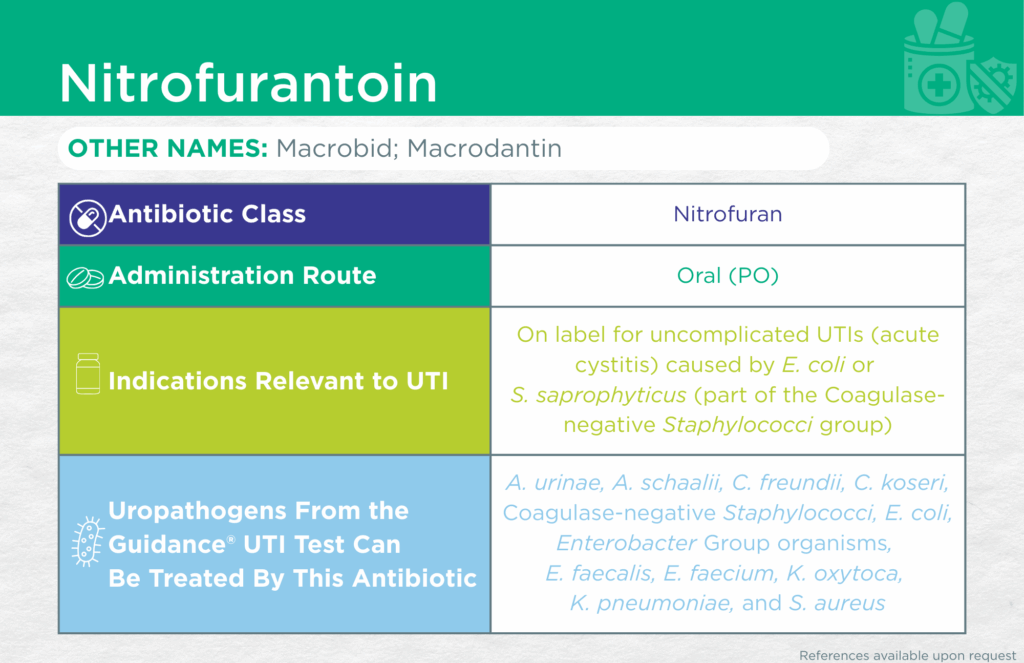
Oral (PO)
Other Names
Macrobid; Macrodantin
Bacteriostatic or Bactericidal
Bactericidal [1]
Antibiotic Class
Nitrofuran
Mechanisms of Action
Nitrofurantoin acts through multiple mechanisms, which may be why bacterial resistance to nitrofurantoin remains limited.
Nitrofurantoin is taken up by bacterial intracellular flavoproteins that reduce nitrofurantoin to reactive intermediates. The intermediates inhibit the bacterial citric acid cycle, DNA and RNA synthesis, and protein synthesis, resulting in bacterial cell death.
WHO AWaRe Classification
Access [2]
Empiric Use Recommendations
Yes* (lower UTI/cystitis) [World Health Organization (WHO), American Urological Association (AUA)] [3-4]
*Avoid if there are signs/symptoms of early onset pyelonephritis
Avoid if complicated UTI is suspected, as nitrofurantoin may not achieve adequate levels in renal parenchyma and blood [Infectious Diseases Society of America (IDSA)] [5]
Indication(s) Relevant to UTI
On label for uncomplicated UTIs (acute cystitis) caused by Escherichia coli or Staphylococcus saprophyticus (part of the Coagulase-negative Staphylococci group).
Checkmarks
CLSI and/or FDA documents support the efficacy of this antibiotic against the following organisms from the Guidance® UTI test: Aerococcus urinae, Citrobacter freundii, Citrobacter koseri, Coagulase-negative Staphylococci, Escherichia coli, Enterobacter Group organisms, Enterococcus faecalis, Enterococcus faecium, Klebsiella oxytoca, Klebsiella pneumoniae, and Staphylococcus aureus.
Published primary literature supports the efficacy of this antibiotic against the following organism from the Guidance® UTI test: Actinotignum schaalii [6-7]