Bladder Cancer Diagnostics

Bladder FISH
UroVysion.

Detects aneuploidy via fluorescence in situ hybridization in patients with hematuria suspected of having bladder cancer.

Designed for use alongside — not instead of — standard urine cytology. Aids initial diagnosis of bladder carcinoma in hematuria patients, and supports subsequent monitoring for tumor recurrence in those previously diagnosed.

How the test works

Chromosomal signal,
at the point of decision.

3+9p21
chromosome aneuploidy · locus loss

What the test detects

Aneuploidy for chromosomes 3, 7, and 17, and loss of the 9p21 locus — via fluorescence in situ hybridization on urine specimens.

Indication

Patients with hematuria suspected of having bladder cancer, or those previously diagnosed and being monitored for recurrence.

2
accepted sample types

Sample methods

Urine collected as voided, bladder wash, or catheterized. Alternatively, 30 mL urine mixed with 15 mL PreservCyt at a 2:1 ratio.

Flexible workflow

Compatible with multiple collection paths so the test fits the visit, not the other way around.

Sample Report & Resources

The result your team actually uses.

A clear positive / negative result, delivered alongside cytology so the clinician has both lines of evidence in front of them at the moment of decision.

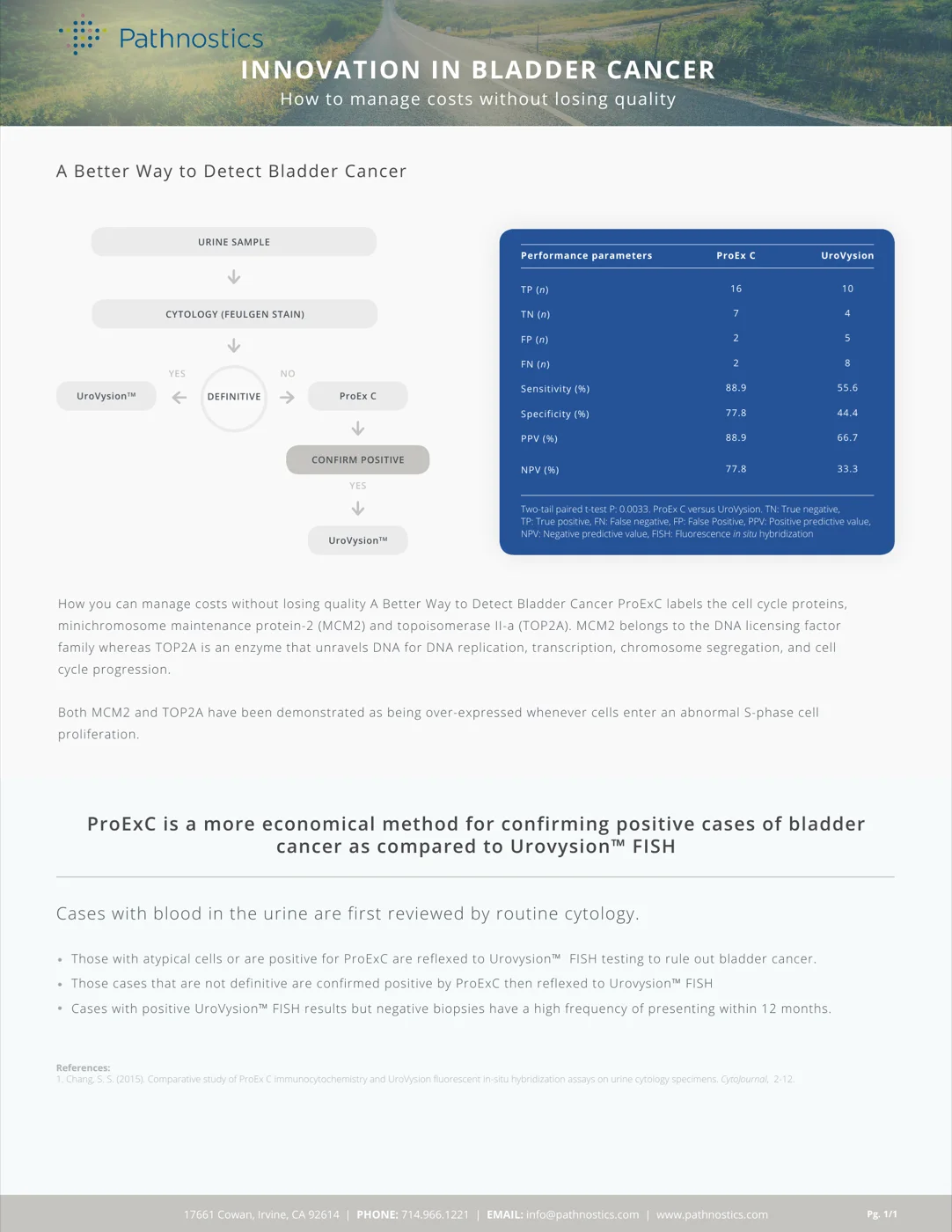
Innovation in Bladder Cancer — workflow diagram (urine sample → cytology → UroVysion™ or ProEx C → confirm positive) and ProEx C vs UroVysion performance parameters table
Frequently Asked Questions

Everything your team typically asks.

What does Bladder FISH / UroVysion detect?

It detects aneuploidy for chromosomes 3, 7, and 17, and loss of the 9p21 locus — chromosomal signals associated with the development and recurrence of bladder cancer.

Which patients should be tested?

Patients with hematuria suspected of having bladder cancer, or patients previously diagnosed with bladder cancer who are being monitored for tumor recurrence. Results are intended to be used in conjunction with — not in place of — standard diagnostic procedures such as urine cytology.

What sample types are accepted?

Two paths:

  • Urine — voided, bladder wash, or catheterized
  • 30 mL urine mixed with 15 mL PreservCyt at a 2:1 ratio

Is the test affected by intravesical therapy?

No. The test performs without interference in the presence of substances such as BCG, mitomycin C, and thiotepa in the urine sample.

How sensitive is the test in muscle-invasive disease?

The assay has demonstrated 100% sensitivity among T1 and T2 tumors. As with any FISH-based result, it should be interpreted alongside clinical context and standard cytology.

Request more information about Bladder FISH / UroVysion.

Connect with a representative to learn how the test fits alongside cytology and cystoscopy in your bladder cancer workflow.