52%
Polymicrobial infections are common
More than half of positive UTI cases are polymicrobial — multiple organisms present in the same specimen, each potentially affecting how the others respond to therapy.1


Pooled antibiotic susceptibility testing that evaluates how antibiotics perform against the infection as a whole — including in polymicrobial cases. Results in 24–36 hours.
Proprietary Technology
Pooled Antibiotic Susceptibility Testing
P-AST™ accounts for the bacterial interactions in polymicrobial infections that change antibiotic resistance and sensitivity — surfacing the personalized therapy options a culture-based result misses.
More than half of positive UTI cases are polymicrobial — multiple organisms present in the same specimen, each potentially affecting how the others respond to therapy.1
When multiple organisms share an environment, pathogens may respond differently to antibiotics than they do in isolation — sometimes more susceptible, sometimes more resistant.2,3 The presence of a resistance gene doesn’t always translate into actual resistance, and facility-wide antibiograms aren’t tailored to the strains in front of you.
Standard culture isolates each organism and tests it on its own. P-AST™ tests how antibiotics actually perform against the patient’s infection as a whole.
Pooled Antibiotic Susceptibility Testing evaluates antibiotics against the full pool of organisms in the patient’s specimen — not against each isolate on its own. The result accounts for the bacterial interactions that can change resistance and sensitivity within a patient-specific polymicrobial infection. The clinician sees what will actually work for this infection, in this patient.
Flagship Test
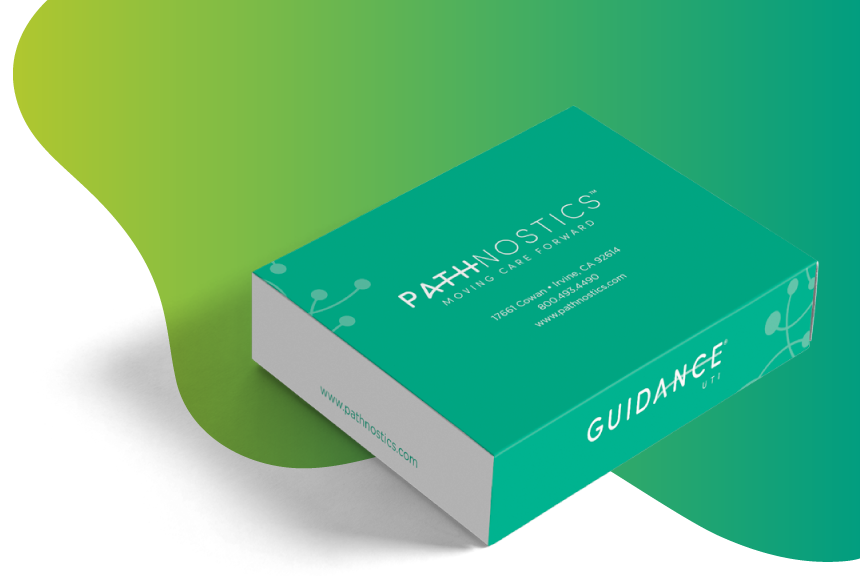
Precision diagnostic testing for complicated, recurrent, or persistent UTIs — combining PCR organism identification and resistance-gene detection with the P-AST™ phenotypic panel. Less than one day from receipt at lab.
Explore Guidance UTIProstatitis
Advanced diagnostic testing for suspected acute or chronic prostatitis — same dual approach (PCR + P-AST™) applied to two sample types: voided post-DRE-massage urine, and semen.
Explore Guidance ProstatitisConnect with a representative to learn how Guidance® tests with P-AST™ can support better-informed first-pass therapy.